

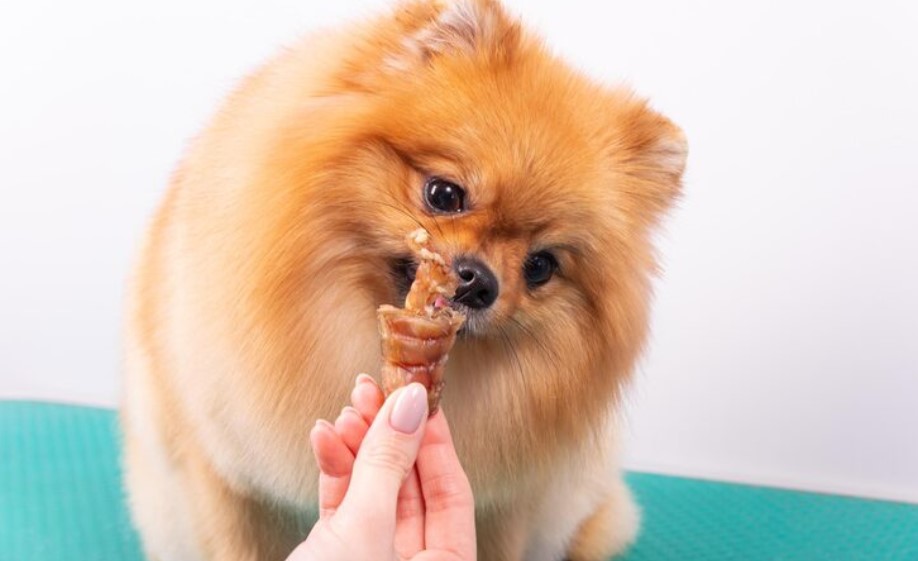
Soft dog treats can be a practical choice for training, rewarding, and treating dogs that find hard biscuits difficult to chew. But a soft texture does not automatically make a treat healthier.
The best choice depends on the ingredients, calories, portion size, your dog’s health, and how often treats are given. Whether you choose chewy bites, training rewards, or lickable dog treats, treats should complement a balanced diet rather than replace it.
Here is what to check before opening the next bag.
What Are Soft Dog Treats?
Soft dog treats are rewards made with a moist, tender, or chewy texture rather than the hard crunch of a traditional biscuit.
They come in several forms:
- Soft chews
- Jerky-style treats
- Training bites
- Meat-based strips
- Semi-moist treats
- Soft sticks
- Lickable treats
- Treat pastes
The softer texture makes them easy to break into small pieces, which can be particularly useful during training.
They may also be easier for some senior dogs or dogs with dental limitations to manage.
However, a dog’s difficulty chewing should not automatically be treated with softer food. Broken teeth, gum disease, oral pain, and other dental problems require veterinary attention.
Are Soft Dog Treats Healthy?
They can be.
A treat’s texture does not determine its nutritional quality.
A soft treat made with appropriate ingredients and fed in controlled portions can fit comfortably into a healthy dog’s diet.
Problems are more likely when treats provide too many calories or begin replacing nutritionally balanced meals.
Treats are generally supplemental foods.
Your dog’s main diet should supply the complete and balanced nutrition needed for its life stage.
Think of treats as an extra, not the foundation of the diet.
What Ingredients Should You Look for in Soft Treats for Dogs?
The best ingredient list depends partly on your dog’s individual needs.
Still, several characteristics are useful when comparing soft treats for dogs.
Clearly Identified Ingredients
Choose products with ingredient information you can easily understand and verify.
If the package emphasizes chicken, salmon, beef, peanut butter, or another ingredient, check where that ingredient actually appears on the list.
Ingredients are listed by weight, so their position provides useful context.
Appropriate Protein Sources
Many dogs enjoy meat-based treats because they are highly palatable.
Protein-based ingredients can also make soft treats useful as high-value rewards during training.
However, treats do not need extremely high protein levels to be useful.
The dog’s complete daily diet matters more.
Manageable Calories
Calories deserve more attention than many pet parents give them.
Imagine a small dog needs roughly 300 calories per day and receives five 20-calorie treats.
That is 100 calories from treats alone.
Those “small rewards” now represent a large part of the dog’s daily energy intake.
This is why small training treats can be useful. You can reward the behavior without providing a large amount of food every time.
Ingredients Your Dog Tolerates
If your dog has a diagnosed food sensitivity, read every ingredient panel.
Do not assume a treat labeled “salmon” contains only salmon.
It may contain other animal proteins, flavorings, starches, or ingredients that matter for a dog following a controlled diet.
How Many Soft Dog Treats Can a Dog Have?
Treat calories should remain a relatively small part of your dog’s daily intake.
A commonly used guideline is to keep treats to no more than about 10% of daily calories, with the majority coming from a complete and balanced diet.
This becomes especially important for small dogs.
A 30-calorie treat does not sound like much to a human, but its impact depends on the dog’s total daily energy needs.
For training, break larger soft dog treats into tiny pieces.
Your dog receives the reward and positive experience without needing a full-size treat after every successful command.
Why Are Soft Dog Treats Useful for Training?
Training rewards need to be quick to eat.
If a dog spends 30 seconds chewing a hard biscuit after every successful behavior, the training rhythm slows down.
A tiny soft treat can usually be eaten quickly, allowing the dog to return attention to the trainer.
Soft treats are also easy to divide.
One treat might become several small rewards instead of a single large one.
This can be particularly helpful when teaching a new behavior that requires repeated reinforcement.
The goal is not to give the dog a full snack every time.
The goal is to create a fast, meaningful reward.
What Are Lickable Dog Treats?
Lickable dog treats have a soft paste, puree, creamy, or squeezable consistency.
Instead of chewing them, dogs lick the treat from a pouch, spoon, feeding mat, toy, or another appropriate surface.
Their texture makes them different from standard chewy treats.
Lickable options can be useful for:
- Interactive enrichment
- Rewarding calm behavior
- Adding variety
- Encouraging engagement with certain toys
- Providing a high-value reward
Always check the calorie content and feeding instructions.
A pouch that looks small can still contribute meaningful calories, particularly for a small dog.
Can Senior Dogs Eat Soft Treats?
Soft treats can be convenient for senior dogs, particularly when hard biscuits have become difficult to chew.
But there is an important distinction.
A senior dog that suddenly stops chewing hard food may have dental pain rather than simply “getting old.”
Signs of possible oral problems include:
- Dropping food
- Chewing on one side
- Bad breath
- Bleeding gums
- Pawing at the mouth
- Refusing hard food
- Facial swelling
Changing to soft treats for dogs may make eating easier, but it does not treat the underlying dental problem.
Have significant chewing changes evaluated by a veterinarian.
What Should You Avoid in Soft Dog Treats?
Instead of creating a fear-based list of ingredients, focus on practical problems.
Excessive Calories
This is one of the biggest concerns.
Frequent treats can quietly increase a dog’s daily calorie intake.
Measure how many treats your dog receives, including rewards from other family members.
Oversized Training Treats
A training reward only needs to be large enough for the dog to notice and value it.
Break soft treats into smaller pieces whenever practical.
Treats That Do Not Match Your Dog’s Needs
A treat may not be suitable because of its calorie level, texture, ingredients, or your dog’s medical condition.
Dogs with certain health problems may need specific dietary restrictions.
Ask your veterinarian before introducing new treats when your dog follows a therapeutic diet.
Unsafe Human Foods
Not every soft human snack is safe for dogs.
Chocolate, grapes, raisins, products containing xylitol, and certain other human foods can be dangerous.
Do not assume something is dog-safe simply because it is soft and easy to chew.
Do Soft Dog Treats Clean Teeth?
Do not assume soft treats provide meaningful dental cleaning.
Their main advantage is usually palatability and texture, not mechanical cleaning.
If dental health is your goal, talk with your veterinarian about tooth brushing, professional dental care, and products specifically designed and evaluated for oral health.
A chewy texture alone does not make a product a dental treatment.
Are Soft Treats Better Than Hard Dog Treats?
Neither texture is universally better.
Choose based on the purpose.
For rapid training rewards, soft treats often have an advantage because they can be divided and eaten quickly.
For a dog that enjoys crunching a biscuit, a hard treat may be perfectly suitable.
For a senior dog with chewing limitations, a softer option may be easier.
For enrichment, lickable dog treats may provide a different experience altogether.
The best choice is the one that fits the dog and the situation while keeping calories under control.
How Should You Store Soft Dog Treats?
Soft treats often contain more moisture than crunchy biscuits, so storage instructions matter.
Close the package properly after every use.
Keep the product in the conditions recommended by the manufacturer.
Some products may require refrigeration after opening, while others are designed for room-temperature storage.
Do not feed treats that develop an unusual smell, texture, mold, or damaged packaging.
Also check the expiration or best-by information before feeding an older package.
Frequently Asked Questions About Soft Dog Treats
Are soft dog treats good for puppies?
They can be useful for training when the product is appropriate for the puppy’s age and the portions are small. Check the package and count treat calories as part of the puppy’s daily intake.
Are soft dog treats good for senior dogs?
Their texture can make them easier to chew, but sudden chewing difficulty should be evaluated because dental pain or another oral problem may be responsible.
Can I give soft dog treats every day?
Healthy dogs can generally receive appropriate treats regularly when portions fit their overall diet and calorie needs.
Are lickable dog treats healthy?
They can fit into a balanced feeding plan when ingredients and calories are appropriate. Check each product rather than assuming all lickable treats have the same nutritional profile.
Can soft dog treats be used for training?
Yes. Their small size, palatability, and easy-to-break texture can make them particularly convenient for repeated training rewards.
Should treats replace dog food if my dog is picky?
No. Treats are not normally designed to replace a complete and balanced daily diet. If a dog repeatedly refuses meals but eagerly eats treats, review the feeding routine and discuss persistent appetite problems with your veterinarian.
Make Every Treat Earn Its Place
The next time you buy soft dog treats, look beyond flavor and package design.
Check the calories. Read the ingredients. Consider the size of each piece and how many your dog receives during a normal day.
For training, break treats into smaller rewards. For senior dogs, choose an appropriate texture but do not ignore signs of dental pain. And when using lickable dog treats, include those calories in the daily total too.
A treat does not need to be nutritionally perfect. It needs to serve its purpose without pushing the dog’s overall diet off balance.
Choose the right reward, keep portions sensible, and save the biggest praise for your dog, because that part is always calorie-free.